
Istanbul, Turkey — Business observers gathering at the Eurasia Packaging Exhibition noted a clear pattern of operational demands emerging across diverse purchasing sectors. Procurement professionals representing logistics providers, retail operations, food packaging companies, and cold chain networks frequently raised distinct operational challenges regarding label performance. These challenges generally fell into three critical requirements: surface clear legibility during high-speed printing, functional durability under diverse environmental exposures, and precise visual contrast for promotional branding.
Addressing these direct operational demands, SWLABEL (Zhejiang Shawei Digital Technology Co., Ltd.) presented a structured portfolio at the exhibition. The company showcased its latest developments, highlighting the top 10 thermal label solutions engineered to resolve day-to-day processing constraints while supporting seamless automation across international supply chains.
High-Frequency Printing and Error-Free Output in Logistics and Transactional Tracking
Operational efficiency in modern material handling depends heavily on the uninterrupted throughput of tracking mechanisms. Within high-volume logistics and automated retail environments, processing speeds require media that maintains high thermal sensitivity without placing excessive wear on mechanical components. Addressing this operational balance, SWLABEL displayed an array of custom-slit solutions. These products include direct thermal label variants and high-density cash register rolls designed for systematic transactional tracking.
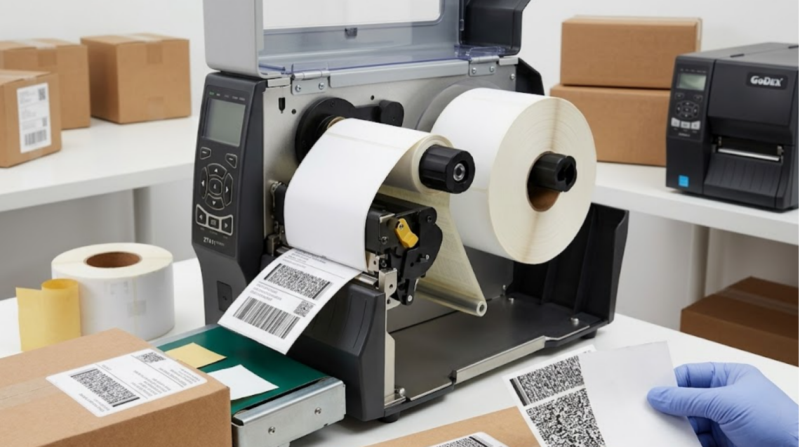
The primary technical feature of this product group rests in the application of a uniform, heat-sensitive coating layered over the surface stock. This formulation ensures that when heat pins contact the material, text and barcode graphics register with solid optical density. This consistent thermal reaction allows processing equipment from manufacturers run at high speed without experiencing adhesive residue or surface scaling. This stability directly minimizes operational downtime and reduces unexpected printhead degradation. To support diverse structural requirements, the standard configuration utilizes a 60g glassine liner. This thin, dense backing provides the uniform tensile strength necessary for high-speed automatic peeling and application lines. For specialized conversion houses requiring secondary processing or manual application, alternative backings such as yellow kraft and clay coated kraft liners are supplied. These options ensure structural flatness and dimensional stability during mechanical die-cutting procedures.
Weather Resistance and Chemical Durability for Cold Chain and Retail Displays
Environmental tolerance presents a different set of challenges for compliance labeling, particularly within grocery retail displays and refrigerated supply networks. Buyers working within cold chain systems require absolute certainty that text elements, weight measurements, and tracking symbols remain intact when exposed to moisture or ambient temperature shifts. The presence of condensation often compromises standard paper faces, leading to data loss or label detachment. To counter these vulnerabilities, SWLABEL presented several specialized material combinations at the event.
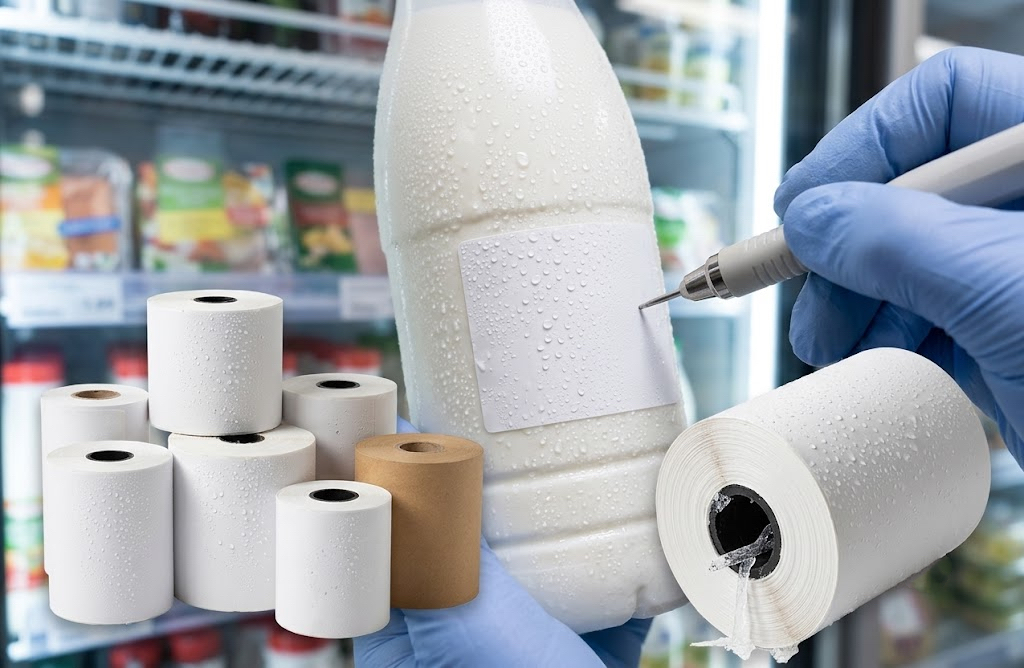
Among these solutions, top-coated thermal paper remains a preferred choice for standard grocery and weight-scale labeling. The protective top-coat establishes a physical barrier that resists ambient moisture, alcohol wipes, and minor exposure to vegetable oils or fats, preventing the thermal layer from reacting prematurely or fading over time. For more challenging environments, such as dairy refrigeration units and deep-freeze meat processing storage where temperatures regularly reach minus 18 degrees Celsius, the white waterproof thermal polypropylene synthetic material offers enhanced durability. This material provides structural tear resistance alongside complete water immunity, keeping tracking data intact throughout extended storage cycles.
Material performance under these conditions depends heavily on structural adhesive science. To meet varying regulatory and application criteria, the manufacturer utilizes specialized hot melt and water-based acrylic formulations developed through targeted research and development. Water-based options eliminate volatile organic compounds, making them suitable for standard dry food packaging, while hot melt adhesives deliver the rapid tack needed for wet, chilled, or irregular surfaces. These adhesives can be paired with permanent or removable properties, giving operators full control over the life cycle of the thermal label. During the exhibition, technical teams verified these characteristics via scratch-testing instruments, demonstrating clear retention of high-contrast print markers compared to untreated paper alternatives under physical friction.
Brand Textures and Variable Data Options for Premium Retail and Promotional Labeling
Modern retail environments also require distinct visual presentation alongside variable tracking data. Premium boutique operators and promotional managers require media that communicates brand value while supporting localized, short-run print adjustments. In these settings, standard utilitarian aesthetics often prove insufficient for specialized merchandising campaigns. To fulfill these aesthetic and functional requirements, the development team introduced several visually distinct variations of the thermal label.
For eco-conscious brands and organic product lines, thermal kraft paper labels preserve a rustic, unbleached texture while maintaining compatibility with standard thermal printing mechanisms. This allows fulfillment centers to print dynamic batch details directly onto stylized packaging without relying on secondary thermal ribbons. In contrast, colored face thermal labels provide high visibility for markdown events, clearance inventories, and warehouse sorting zones, enabling rapid visual identification across busy fulfillment floors. For consumer goods requiring high-resolution corporate logos alongside standard tracking codes, thermal transfer semi-gloss polypropylene films offer a durable option. When paired with high-performance wax-resin ribbons, this combination provides exceptional scratch resistance and clear color rendition, preventing smudge defects during shipping. To accommodate specialized quick-print facilities and local packaging workshops, these solutions are delivered in customizable configurations, including A3 and A4 sheets or custom-wound mini rolls, allowing for cost-effective prototyping and low-volume production runs.
Conclusion
As operational requirements across global supply chains grow more precise, material reliability remains a key factor in avoiding processing delays. The systematic display by Zhejiang Shawei Digital Technology Co., Ltd. at Eurasia Packaging demonstrated how targeted material engineering can address practical handling problems across different industries. By offering adjustable material configurations, validated low-temperature adhesion, and versatile slitting options, the enterprise continues to supply dependable thermal label solutions tailored to modern industrial standards. Industry professionals and conversion facilities seeking to optimize their tracking systems can view technical specifications or request material sample rolls by visiting the corporate website.
To learn more about these materials and explore the full product line, please visit the official company website at https://www.zjswlabel.com/.
Post time: Aug-23-2026


