
The Strategic Power of ISO9001 in Custom Manufacturing
In the complex landscape of global manufacturing, the label industry often faces significant challenges regarding consistency and precision. Many procurement professionals struggle with “invisible quality risks,” such as batch-to-batch color deviations, adhesive instability, or unforeseen delivery delays that can halt entire production lines. These issues typically stem from a lack of systematic control in the manufacturing process. To address these concerns, industry leaders are shifting focus toward rigorous quality management systems. As a China Leading Custom Label Supplier, Zhejiang Shawei Digital Technology Co., Ltd (SWLABEL) demonstrates that true leadership in this sector is not merely defined by equipment capacity, but by a robust commitment to international standards that bridge the gap between manufacturer and client.
The ISO9001:2015 certification serves as far more than a decorative credential for modern factories. It acts as a “trust contract” within the supply chain, ensuring that every order adheres to a repeatable, audited process. By implementing this framework, manufacturers move away from reliance on individual skill and toward a data-driven operational model. This systemic approach is particularly vital in the custom label sector, where the diversity of materials and applications creates a high potential for error.
Decoding the Operational Impact of ISO9001 in Custom Manufacturing
The core principles of the ISO9001:2015 standard—specifically the process-based approach and risk-based thinking—provide a necessary roadmap for complex production. In the context of label manufacturing, these principles translate into a seamless flow from initial order review to final delivery. Every custom request undergoes a rigorous evaluation to determine technical feasibility before production begins. This prevents the “over-promise and under-deliver” cycle that often plagues non-certified suppliers.
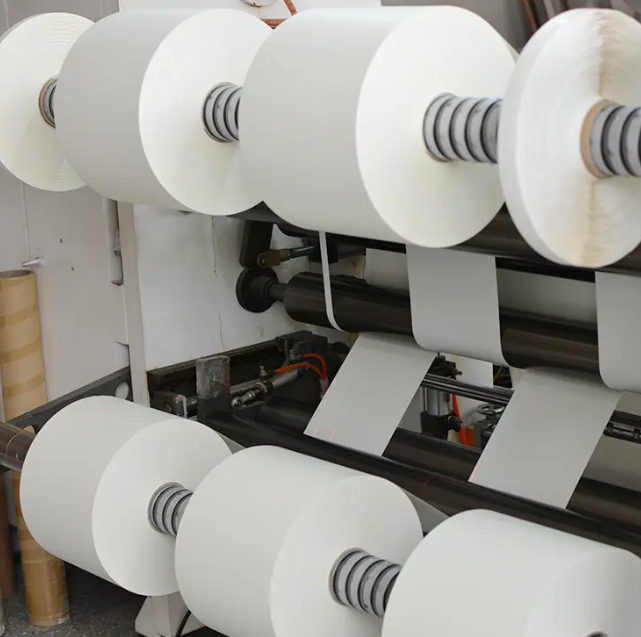
For custom label production, where specifications vary wildly, standardization is the only way to ensure stability. Labels often require specific thicknesses, ranging from 50um to 450um, or specialized adhesives for unique surfaces. Without a Standard Operating Procedure (SOP) governed by a quality management system, maintaining consistency across small batches and multiple production runs is nearly impossible. ISO9001 forces a culture of documentation and verification, ensuring that the tenth batch of labels matches the first with mathematical precision.
Translating Quality Systems into Tangible Client Assurance
SWLABEL integrates these global standards directly into its daily production cycles to provide measurable reliability. The company manages a vast portfolio of products, including jumbo rolls, mini rolls, and sheet formats like A3 and A4. Each format requires distinct tension controls and cutting accuracies. By applying ISO-certified workflows, the facility ensures that personalized needs are met without sacrificing the structural integrity of the material. This transition from “custom” to “standardized custom” is a hallmark of an advanced manufacturing entity.
The rise of the digital label age has introduced new variables in print quality and ink adhesion. Products designed for UV Inkjet, Memjet, HP Indigo, and Laser printing must meet strict chemical and physical criteria. Quality systems allow for a “closed-loop” control mechanism. Technicians monitor ink absorption rates and die-cutting precision in real-time. This meticulous oversight enables the delivery of “efficient, colorful, and flexible” labeling solutions that perform reliably under various environmental conditions.
Supply chain integrity further reinforces this quality loop. A certified manufacturer does not just inspect the final product; it audits the source. By systematically screening suppliers of raw materials like BOPP films and hot-melt adhesives, the production facility eliminates quality fluctuations at the origin. This proactive stance on material sourcing ensures that the labels remain durable and functional throughout their intended lifecycle.
Analysis of Customization Service Advantages (English Version)
In an era of fragmented global market demands, SWLABEL’s customization advantages extend beyond simple dimensional adjustments to encompass “full-parameter technical matching” capabilities. Addressing the common industry challenge of material compatibility, the company has established a standardized personalization workflow that precisely manages requirements ranging from 50μm ultra-thin films to 450μm high-strength heavy-duty materials.
This flexible production capacity ensures that whether a multinational requires large-scale industrial Jumbo Rolls or a boutique brand seeks high-precision color reproduction for small-batch digital printing in A3/A4 formats, they receive a consistent delivery experience under a unified quality control system. This “personalized expression within industrial standards” effectively resolves the traditional conflicts between customization, cost, and quality stability, transforming complex non-standard requests into controlled, efficient, and cost-effective digital manufacturing solutions.
The Long-term Value of Systematic Quality Management
Beyond immediate production quality, a robust management system offers significant “hidden benefits” for the end-user. The primary advantage is the reduction of Total Cost of Ownership (TCO). While many buyers focus on the unit price per label, the costs associated with returns, reprints, or production downtime due to faulty labels are much higher. A “prevention-first” system significantly lowers these risks, protecting the client’s bottom line and brand reputation.
Furthermore, ISO9001 serves as a universal language for international trade. For global brands seeking partners in China, this certification represents the minimum threshold for trust. It simplifies the vetting process for overseas procurement teams, as they know the supplier speaks the same language of quality and accountability. This alignment is essential for companies aiming to integrate into high-end global supply chains.
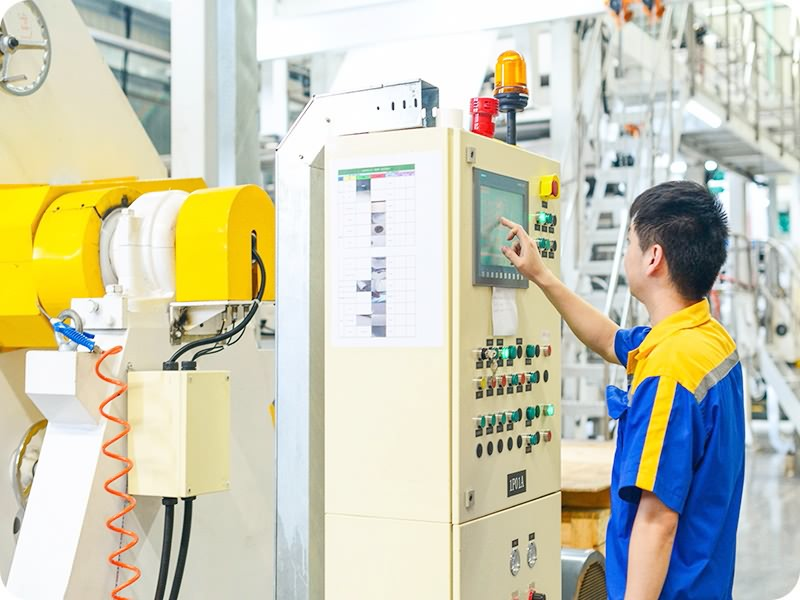
The system also drives continuous evolution through internal audits and management reviews. These mechanisms force a manufacturer to analyze failures and optimize processes constantly. This ensures that the production technology does not stagnate but improves alongside shifting market demands and technological advancements.
Beyond Certification: A Modern Vision for Manufacturing
The evolution of SWLABEL from an experience-driven workshop to a process-driven modern enterprise highlights a broader trend in Chinese manufacturing. The transition to ISO9001:2015 standards signifies a maturity that values long-term stability over short-term gains. It proves that a manufacturer can handle the complexities of the digital age while maintaining the rigor required by traditional industrial standards.
As the industry moves forward, the focus will remain on how data and documented processes can enhance the user experience. With a foundation built on verified quality systems, the vision of serving a global market becomes a tangible reality. The commitment to these standards ensures that every label produced is a reliable component of the client’s success, paving the way for sustainable partnerships with top-tier global brands.
For more information regarding professional labeling solutions, please visit: www.zjswlabel.com
Post time: May-21-2026


